Chronos

Initializing Frequencies...

Chronos 1958 — 2026

The Digital
Odyssey

A retrospective on the network that redefined humanity, from a clandestine military project to the collective intelligence of the new era.

Scroll to begin
1958

The ARPA Genesis

In the shadow of the Sputnik launch, the U.S. Department of Defense established the Advanced Research Projects Agency (ARPA). Born from Cold War anxieties, its mission was to ensure American military technology outpaced the world—unknowingly laying the foundation for the global network.

Department of Defense / ARPA
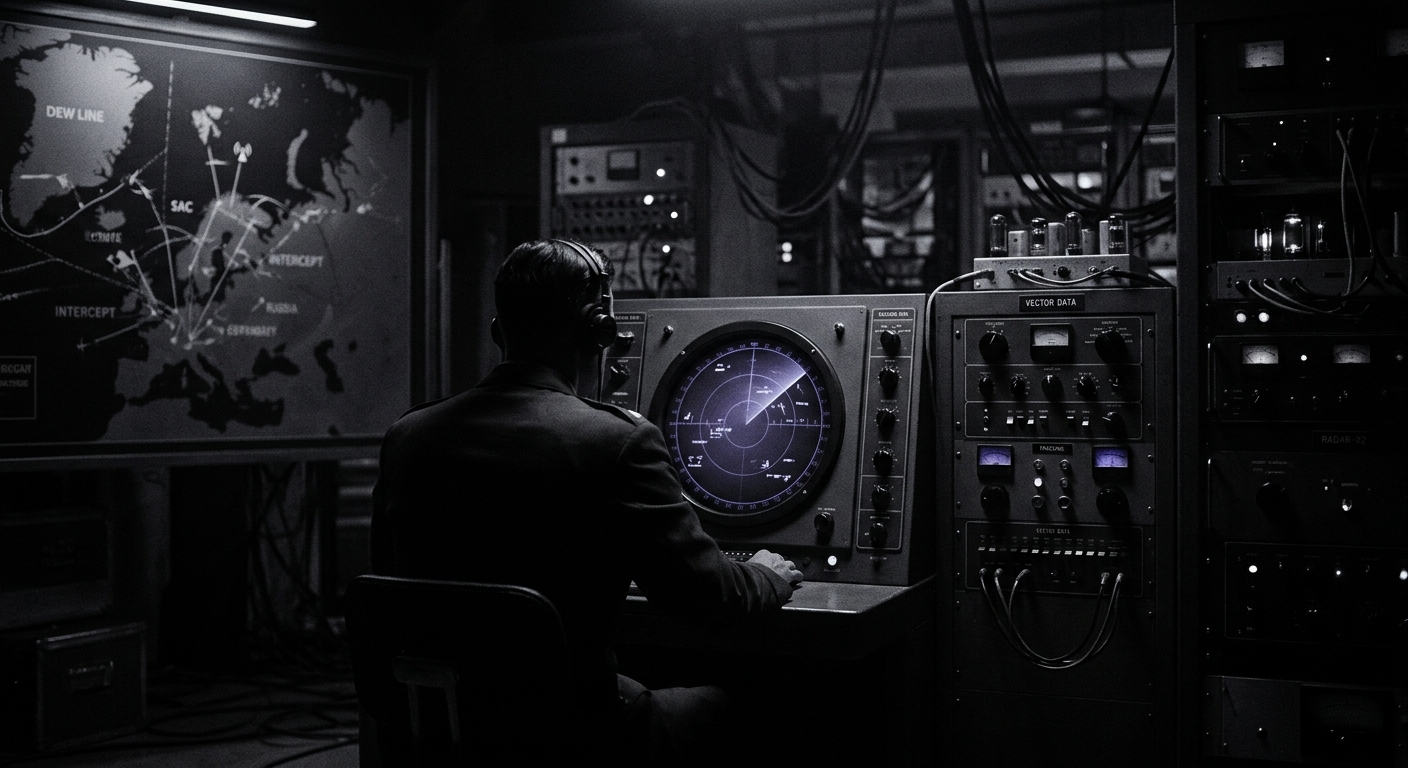
Cold War Military Computing
ARPANET Mainframe
1969

From Concept to Reality

A decade after the birth of ARPA, the vision is realized. Inside a laboratory at UCLA, the first message is sent to SRI over the nascent ARPANET. A simple "LO" — the system crashed before "LOGIN" could be completed, yet the first node of a global brain was officially live.

Arpanet / UCLA
1971

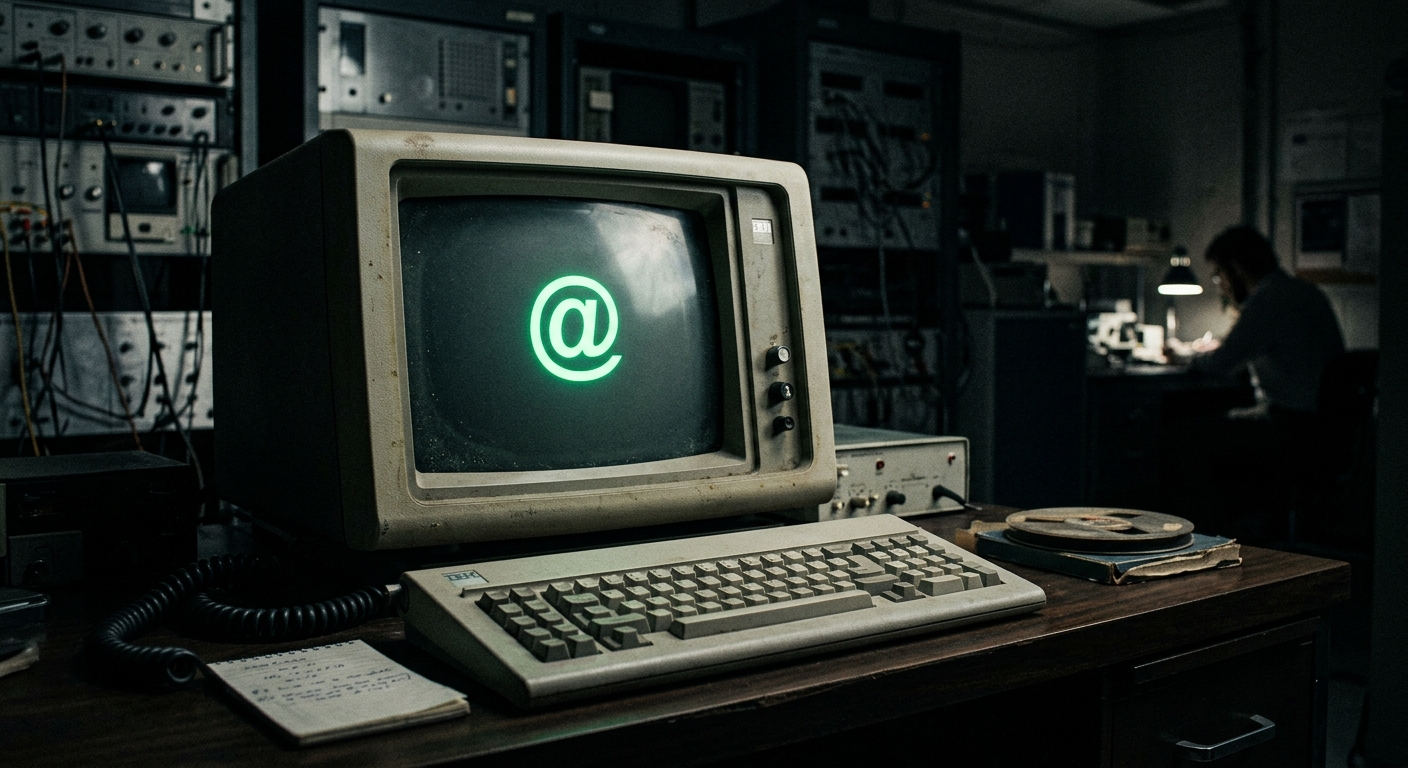
The First @

Ray Tomlinson sends the first network email between two computers side-by-side. The choice of the "@" symbol to separate the user from the host created the first digital address, forever changing how we connect.

BBN / Ray Tomlinson
First Email symbol
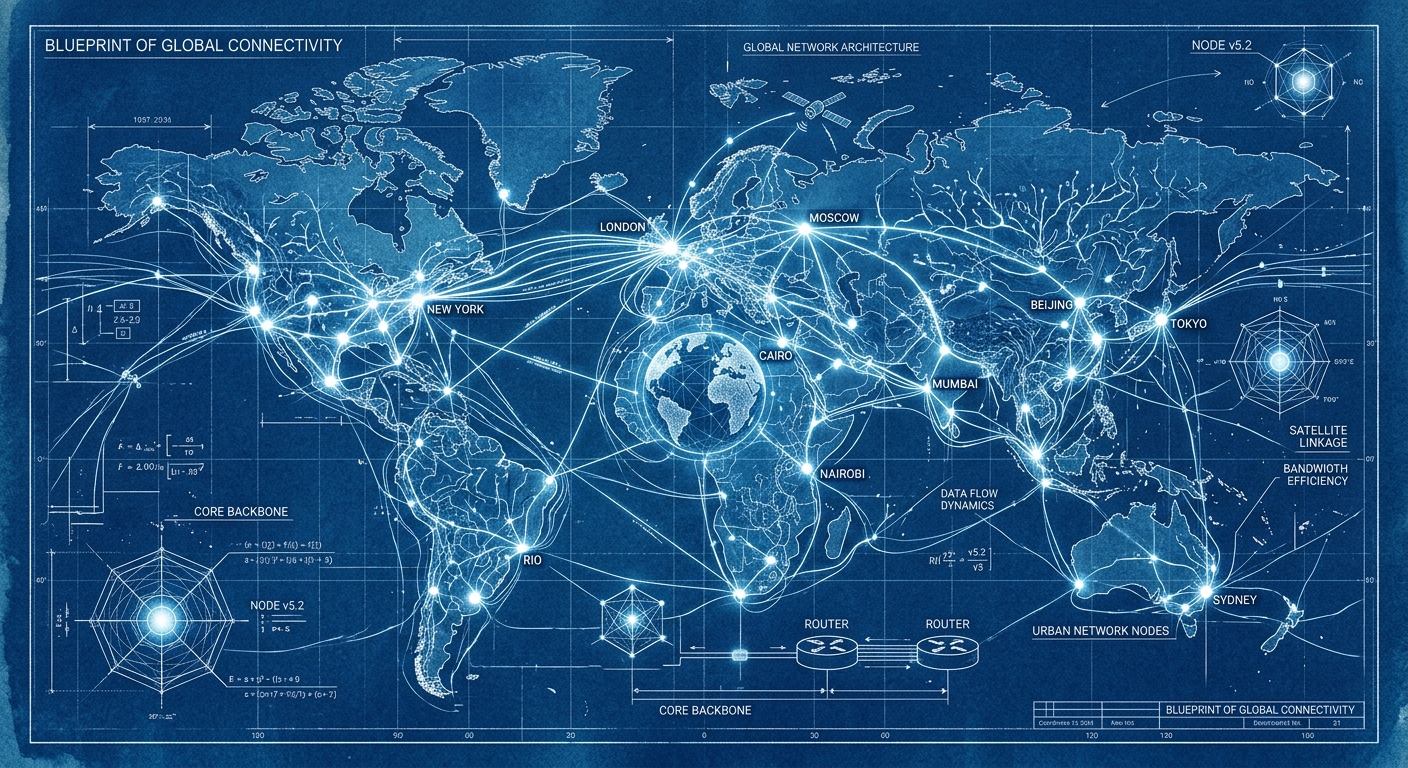
TCP/IP Blueprint
1974

Universal Language

Vint Cerf and Bob Kahn publish "A Protocol for Packet Network Intercommunication." This design for TCP/IP provided the standard handshake that allowed disparate networks to unite into a single "Internet."

TCP/IP / Protocol Design
1979

The Digital Agora

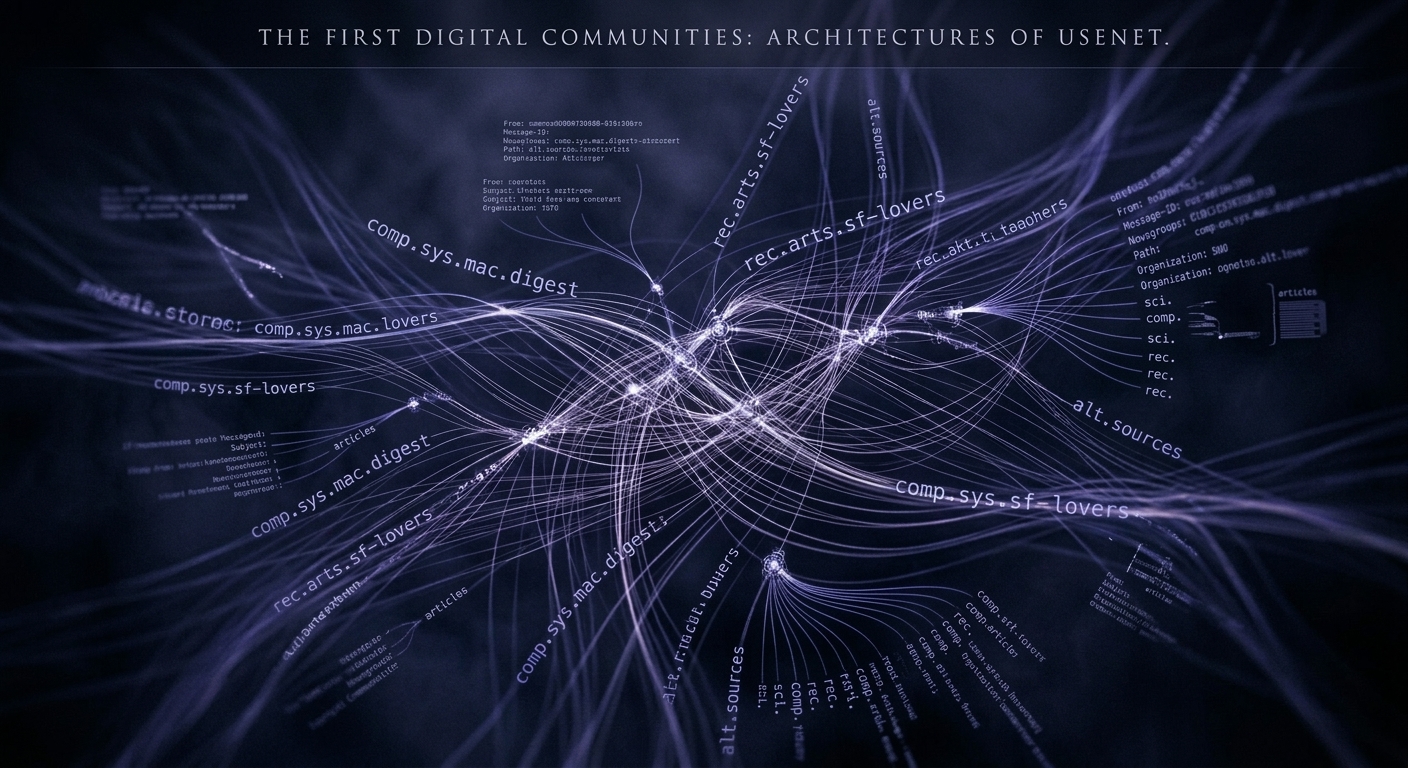
USENET is born. A decentralized network for discussion and file sharing. Before the web, newsgroups were the social tissue of the internet, creating the first global virtual communities and establishing the protocols for digital gathering.

USENET / Duke University
Usenet conceptual visualization
DNS Conceptual
1983

The Web's Compass

The Domain Name System (DNS) is established, translating complex IP addresses into human-readable names. The internet becomes a place of destinations—like .com and .org—rather than just a map of numbers.

DNS / Paul Mockapetris
1988

The Great Awakening

The Morris Worm, the first major internet-scale computer worm, spreads through the network. It was a wake-up call for the world, proving that a connected society is as vulnerable as it is powerful.

Cybersecurity / Morris Worm
Cybersecurity threat visualization
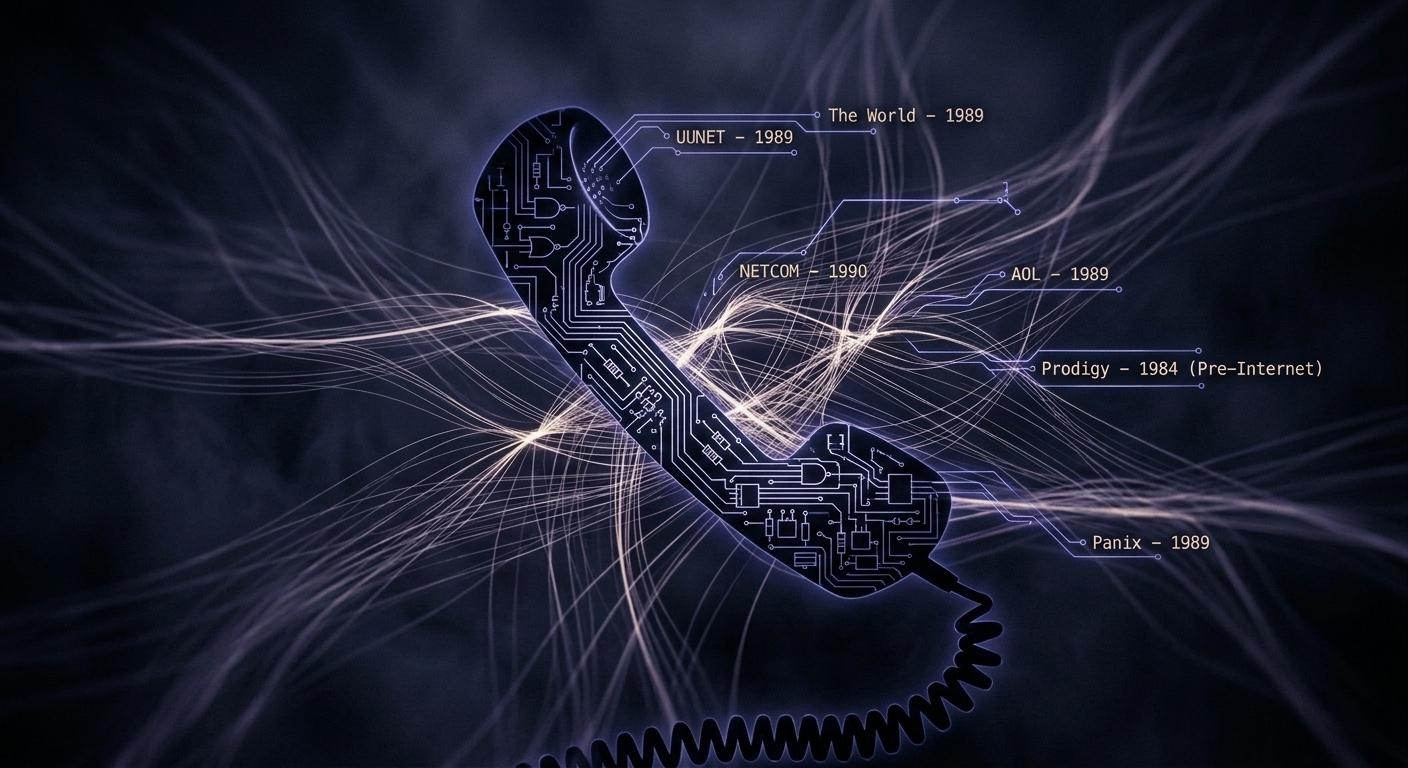
Early ISP Infrastructure
1989

Breaking the Barrier

The first commercial Internet Service Providers (ISPs) emerge. The "World" (STD) begins offering dial-up access to the general public. The internet escapes the labs of academia and the bunkers of the military to enter the home.

Commercialization / The World
1991

Hypertext Horizon

Tim Berners-Lee releases the World Wide Web software at CERN. Information was no longer a destination, but a link. The browser became our window to the sum of human knowledge.

CERN / WWW
World Wide Web Concept
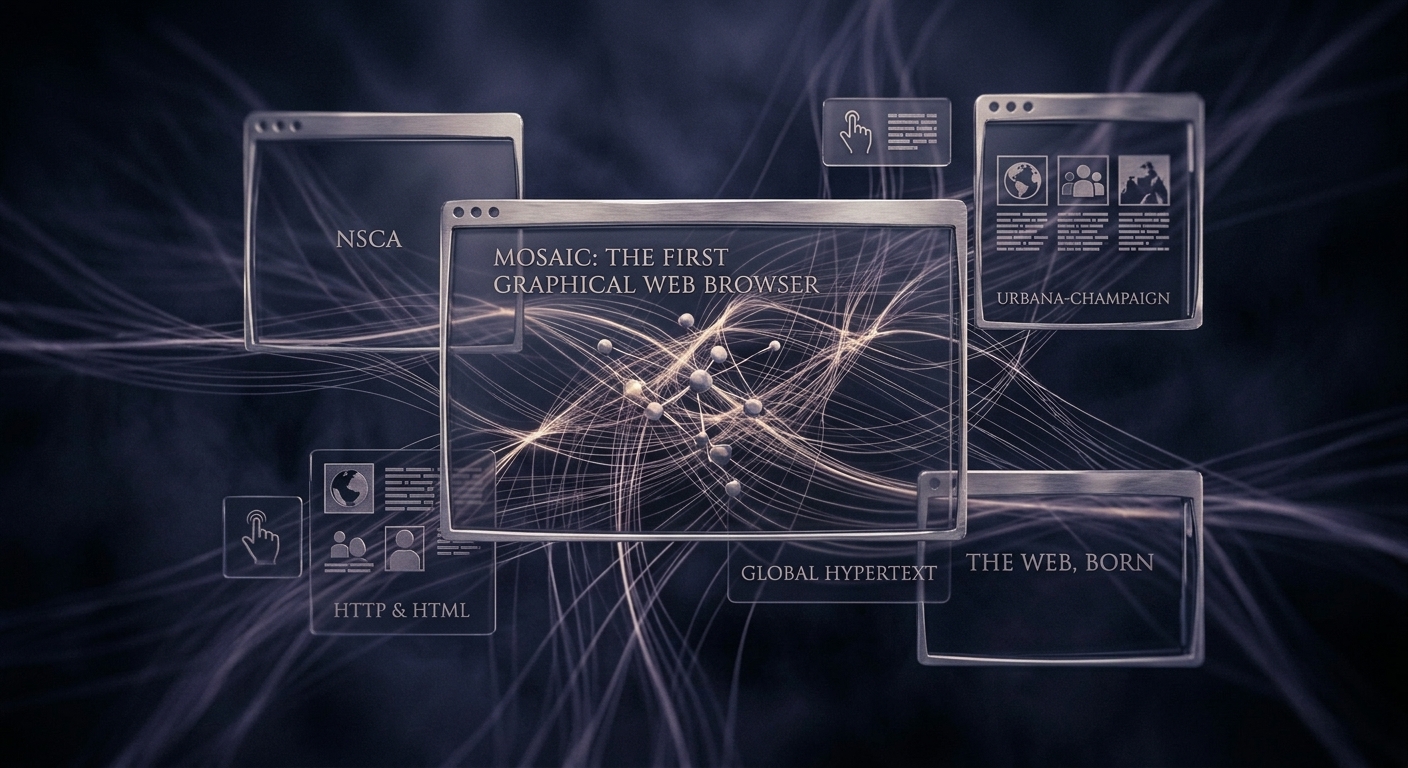
Mosaic Browser visualization
1993

The Face of the Web

NCSA Mosaic is released. As the first browser to display images inline with text, it transformed the web from a text-based medium into a visual, accessible universe, triggering the initial spark of the dot-com boom.

Mosaic / Marc Andreessen
1995

Global Marketplace

Amazon and eBay open their digital doors. The internet is no longer just for information—it is for trade. The foundation of the modern digital economy is laid, turning every home into a storefront.

E-Commerce / Amazon & eBay
Early E-commerce Concept
Google Search Visualization
1998

The World's Index

Google launches with a simple goal: to organize the world's information. Search algorithms become the gatekeepers of knowledge, fundamentally changing how we navigate the sheer volume of human experience.

Search / Google
1999

The P2P Disruption

Napster and BitTorrent decentralize digital distribution, challenging the foundations of the music and film industries. The network becomes a friction-less conduit for culture, shifting the power from gatekeepers to the collective.

Peer-to-Peer / Napster & BitTorrent
P2P Visualization
Wikipedia Concept
2001

Collective Wisdom

Wikipedia launches, proving that a global community of volunteers can build the world's largest repository of knowledge. It stands as the ultimate testament to the collaborative power of a connected planet.

Collaboration / Wikipedia
2004

The Social Fabric

The "Web 2.0" revolution begins. Platforms like Facebook and YouTube shift the internet from static pages to living social networks, where every user is a creator and the content is the community itself.

Social Web / Web 2.0
Web 2.0 Social
Streaming Media Visualization
2005

The On-Demand Shift

As broadband becomes ubiquitous, the internet evolves into a global theater. The rise of dedicated streaming platforms fundamentally rewrites the rules of media consumption, replacing physical ownership with instantaneous, cloud-based access.

Streaming / Broadband Culture
2007

Pocket Revolution

The launch of the iPhone triggers the mobile internet era. The web leaves the desk and follows us into the street, the pocket, and the palm of the hand—making connectivity a constant state of being.

Mobile / iPhone
Mobile Revolution
Bitcoin Decentralization
2009

Decentralized Trust

Satoshi Nakamoto mines the Bitcoin genesis block. The blockchain introduces digital scarcity and a way to transfer value without a central authority, beginning the era of decentralized internet protocols.

Blockchain / Bitcoin
2013

The Age of Transparency

The Snowden revelations spark a global conversation about digital surveillance and privacy. The internet begins a fundamental shift toward universal encryption (HTTPS), redefining the social contract between citizens and the network.

Security / Digital Rights
Digital Privacy
Pinegrow Web Editor Birth
2014

Visual Web Craft

Pinegrow Web Editor is born, introducing a new paradigm of professional visual web editing. It bridges the gap between hand-coding and visual design, empowering creators to build the modern web with precision and structural integrity.

2016

The Algorithmic Echo

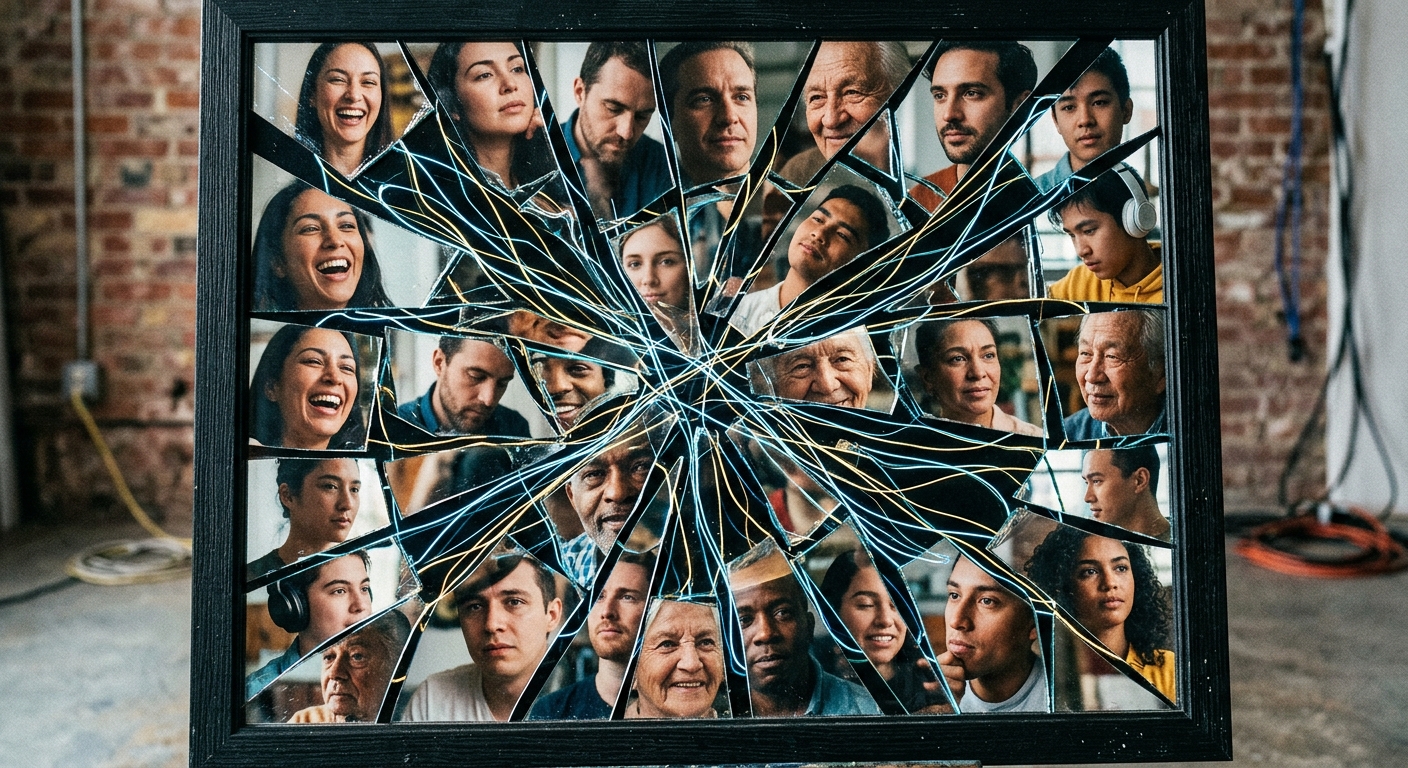
Deep learning enters the mainstream, powering recommendation engines that shape global discourse. The internet becomes a mirror, reflecting our own biases back to us in a landscape defined by polarized data silos.

Deep Learning / Social Media
Algorithmic Echo
Digital Migration
2020

The Great Migration

A global pandemic forces the physical world to retreat into the digital cloud. Work, education, and social life migrate entirely online, permanently blurring the lines between our physical existence and our digital presence.

Cloud Era / Remote Culture
2023

The Generative Epoch

The explosion of Large Language Models (LLMs) marks a turning point. The internet is no longer just a repository of human-created content; it begins to generate itself, ushering in the era of artificial intelligence.

Generative AI / LLMs
Generative AI
AI Integrated Future
2026

The Neural Mesh

The internet is no longer something we visit; it is an ambient intelligence that surrounds us. AI agents and hyper-connected reality have blurred the line between the digital and the biological, creating a symbiotic global mind.

Ambient AI / Web 4.0